Oura Ring Gen 4 vs Apple Watch Series 10: Which is the Ultimate Health Tracker in 2026? A Brutally Honest Review
Disclosure: This article may contain affiliate links. If you purchase through these links, we may earn a small commission at no extra cost to you.
Managing a high-pressure schedule requires precise energy management. As a female tech entrepreneur navigating back-to-back meetings and cross-country travel, reliable health tracking is not just a luxury; it is a critical component of sustaining peak performance. Finding the right smart health tools for everyday life can significantly impact your daily routines.
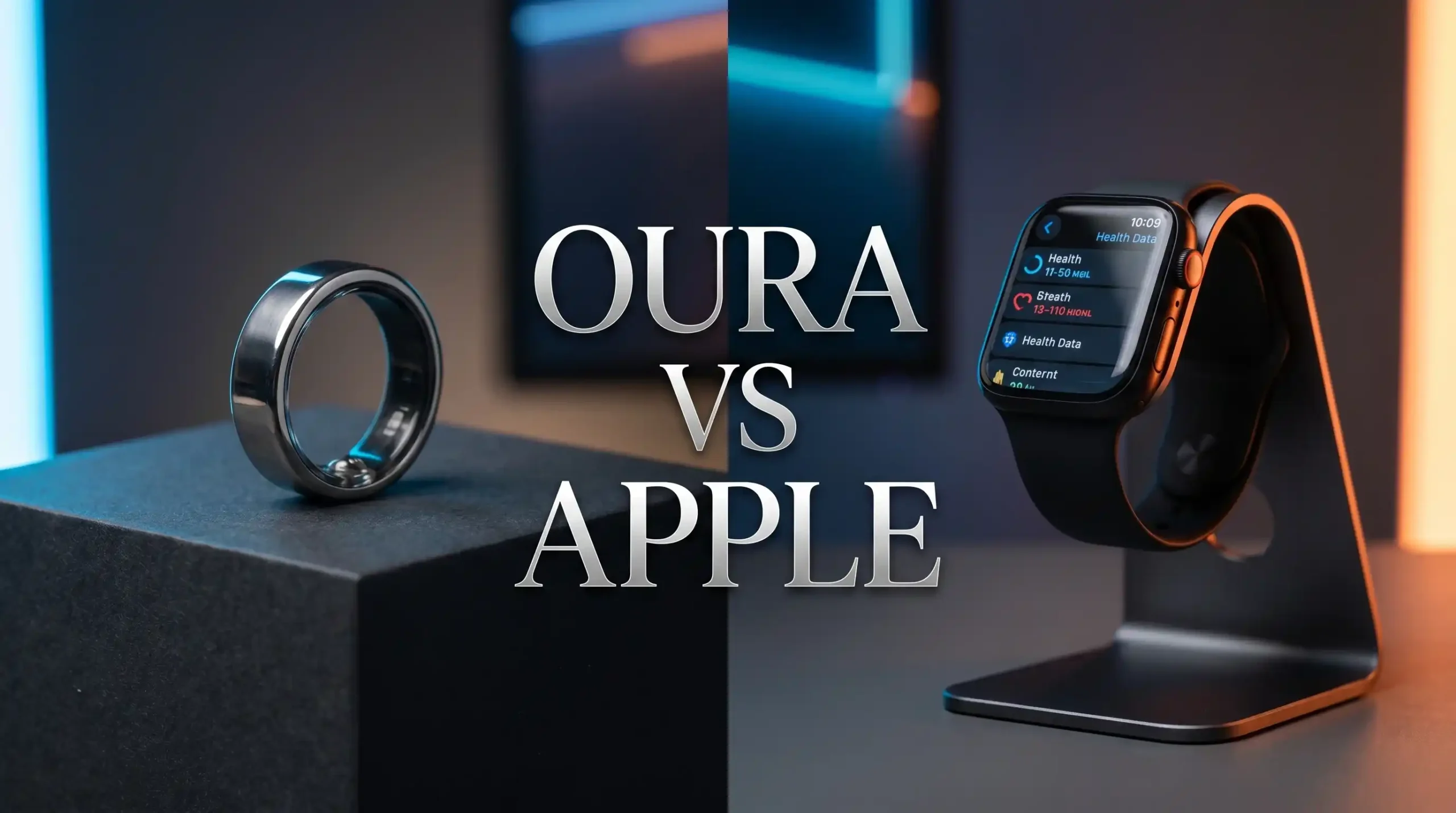
During extended testing across various real-world scenarios—from intensive gym sessions to international flights—I thoroughly evaluated the current market leaders. The Oura Ring Gen 4 vs Apple Watch Series 10 debate is currently dominating the wearable space.
However, comparing them directly is often misleading. They serve distinctly different purposes. This review breaks down their real-world performance, hardware limitations, and ecosystem value to help you make an informed decision.
The Spec Breakdown: Feature Comparison
Before evaluating the user experience, we need to establish the baseline hardware differences. Both devices are premium, but their architecture reflects entirely divergent priorities.
| Feature | Oura Ring Gen 4 | Apple Watch Series 10 |
|---|---|---|
| Form Factor | Smart Ring | Smartwatch |
| Battery Life | Up to 8 days | 18 hours (Normal Use) |
| Charging Time | 20 to 80 minutes | 0 to 80% in 30 minutes |
| Key Health Sensors | HR, HRV, SpO2, Skin Temp | HR, ECG, SpO2, Sleep Apnea |
| App Ecosystem | Oura App (Proprietary) | Apple Health & WatchOS Apps |
| Subscription Cost | $6/month (Required for full data) | No monthly fee |
| Starting Price | $350 | $399 |
For a broader overview of how these fit into a connected lifestyle, explore our comprehensive Smart Health Devices Guide.
Design and Comfort: The Fitness Ring vs Smartwatch Experience
Wearable technology only works if you actually wear it. Comfort dictates long-term adherence.
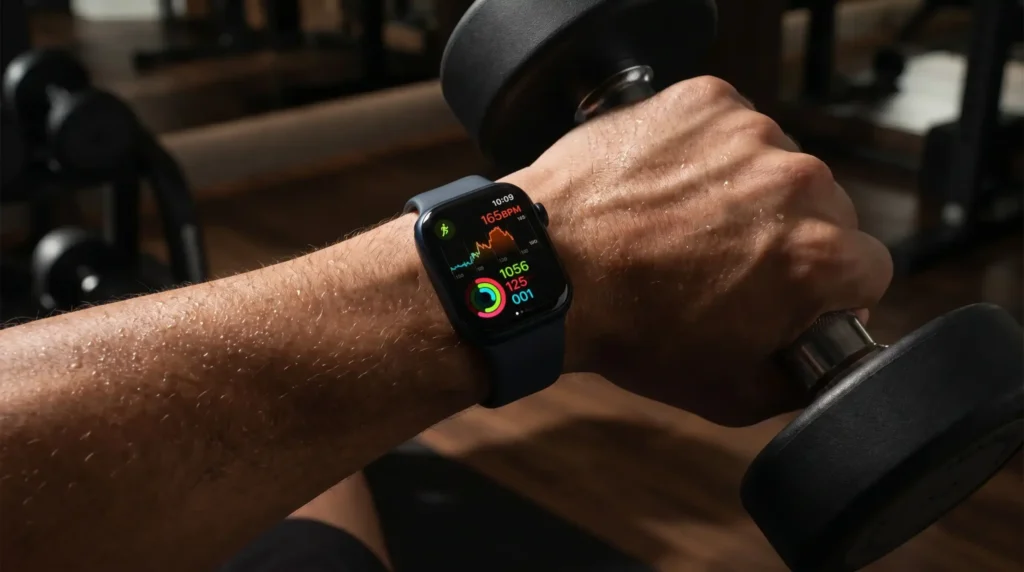
Apple engineered the Series 10 to be remarkably sleek, measuring just 9.7mm thick. Available in lightweight aluminum or a highly durable titanium finish, the wide-angle OLED display is stunning. It feels premium and acts as a brilliant extension of your digital life. However, it remains a visible, physical presence on your wrist. During deep focus blocks or formal events, it can feel intrusive.
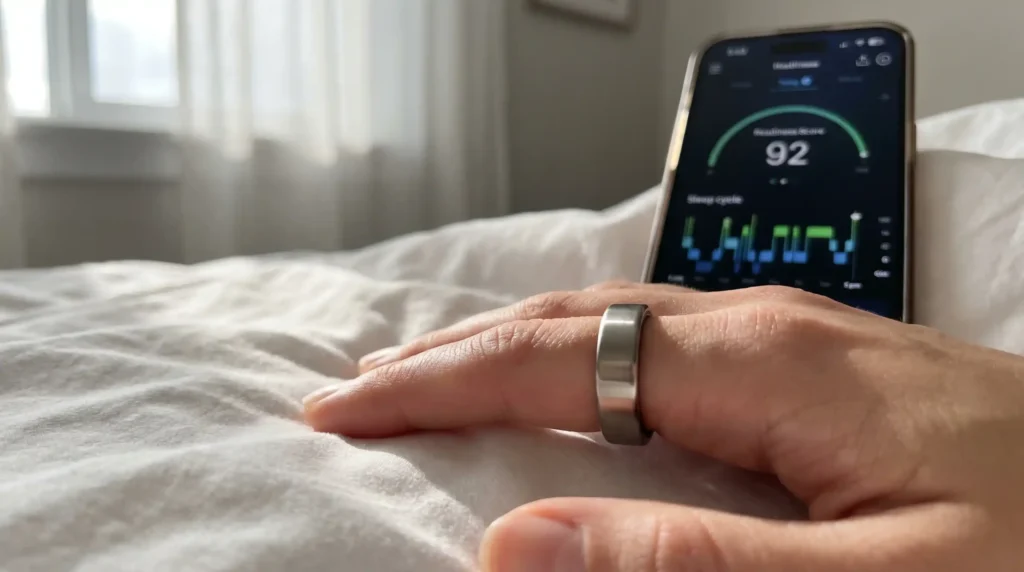
Oura takes a passive, invisible approach. The Gen 4 features a fully recessed sensor array housed entirely within a titanium shell. Weighing around four grams, it essentially disappears once you put it on. Oura also introduced a Zirconia Ceramic option this year. This finish closely mimics high-end jewelry, making it highly versatile for professional settings where a glowing screen might be a distraction.
If your primary goal is unobtrusive tracking, the smart ring form factor holds a significant advantage.
Sleep Tracking Mastery: Which is the Best Sleep Tracker 2026?
Accurate recovery data is essential for maintaining productivity. Both devices approach nighttime monitoring very differently.
Apple recently integrated sleep apnea notifications into the Series 10. By monitoring breathing disturbances, the watch provides actionable medical alerts that can genuinely alter health outcomes. For basic sleep staging, it is highly accurate. Yet, the data presentation remains somewhat clinical, lacking deep holistic interpretation. Additionally, many users find wearing a smartwatch to bed inherently uncomfortable.
Oura operates as a dedicated sleep and recovery specialist. The Gen 4 utilizes an 18-pathway Smart Sensing architecture to minimize data gaps throughout the night. It tracks resting heart rate, heart rate variability (HRV), and minute shifts in skin temperature.
More importantly, Oura synthesizes this data into a daily Readiness Score. Instead of just logging poor sleep, the Oura app contextualizes it, advising you on whether to push through a workout or prioritize rest.
If you are specifically optimizing for overnight metrics, read our dedicated breakdown of the Best Sleep Trackers 2026.
Battery Life: Apple Watch 10 Battery Life vs Oura’s Endurance
Battery management directly impacts how seamlessly a device integrates into your routine.
The Apple Watch 10 battery life remains anchored at roughly eighteen hours of standard use. This requires a dedicated daily charging habit. Apple mitigates this with fast charging—reaching 80% in thirty minutes—which easily fits into a morning shower routine. However, utilizing GPS for outdoor runs or taking frequent cellular calls will deplete the battery much faster, potentially leaving you disconnected by evening.
Oura provides a drastically different experience. The Gen 4 runs for up to eight days on a single charge. During extended business trips, this extended battery life is invaluable. It removes the underlying anxiety of carrying proprietary charging cables, allowing the hardware to fade seamlessly into the background.
Real-Time Activity and Ecosystem Integration
Where Oura excels in passive recovery, Apple dominates in active engagement.
If you require real-time feedback during a workout, the Apple Watch Series 10 is the superior tool. The high-brightness display allows you to monitor heart rate zones instantly. The S10 chip handles on-device Siri commands flawlessly, and the double-tap gesture provides hands-free control over timers and calls. It is an active command center. Furthermore, the FDA-cleared ECG app offers immediate, medical-grade cardiovascular checks.
Oura relies on Automatic Activity Detection. While it accurately logs heart rate during walks or cycling, you must open the mobile app post-workout to view the metrics. It is not ideal for pacing a run or actively managing interval training.
The Breakdown: Pros and Cons
To clarify the decision, here is a transparent look at what drives user satisfaction and what causes frustration.
Oura Ring Gen 4
Pros (Why People Love It):
- Exceptionally lightweight and comfortable for 24/7 wear.
- Superior eight-day battery life eliminates daily charging fatigue.
- Deeply actionable, holistic recovery and sleep insights.
- Aesthetically premium, especially the new ceramic finishes.
Cons (What Frustrates Users):
- The mandatory $6/month subscription fee to access your own data.
- Lack of real-time pacing or live workout metrics.
- Metal construction can scratch during heavy weightlifting.
Apple Watch Series 10
Pros (Why People Love It):
- Brilliant, wide-angle OLED display for immediate notifications.
- FDA-cleared ECG and life-saving sleep apnea detection.
- Flawless, frictionless integration with the iOS ecosystem.
- No recurring monthly subscription costs for the hardware’s core features.
Cons (What Frustrates Users):
- The 18-hour battery life necessitates strict daily charging habits.
- Can feel bulky and uncomfortable during sleep.
- Constant notifications can increase screen fatigue.
Who Should NOT Buy These Devices
Understanding a product’s limitations is just as important as knowing its strengths.
Who Should Avoid the Oura Ring Gen 4:
Avoid this device if you are an intense athlete who needs live pacing data on your wrist. You should also avoid Oura if you are fundamentally opposed to paying a recurring monthly subscription fee for health analytics.
Who Should Avoid the Apple Watch Series 10:
Avoid this device if you suffer from digital burnout and want to reduce your daily screen time. It is also not ideal for users who experience battery anxiety or individuals who absolutely cannot tolerate wearing a watch to bed. Furthermore, Android users should entirely bypass the Apple Watch, as it requires an iPhone to function.
Frequently Asked Questions
Is Oura Ring better than Apple Watch?
It is not objectively better; it is structurally different. The Oura Ring is better for passive tracking, actionable recovery insights, and users who dislike wearing watches. The Apple Watch is better for active fitness tracking, real-time smart notifications, and deep iOS integration.
Which is better for sleep tracking?
The Oura Ring Gen 4 is generally considered superior for overall sleep tracking due to its lightweight form factor and highly detailed, interpretable Readiness metrics. However, if your primary concern is detecting potential sleep apnea, the Apple Watch Series 10 offers specific, medically validated alerts for breathing disturbances.
Is Apple Watch worth it in 2026?
Yes, the Apple Watch Series 10 remains the most comprehensive smartwatch on the market for iPhone users. Its thinner design, larger display, and advanced health sensors (like the ECG) justify the investment, provided you are comfortable with daily charging.
The Final Verdict
Ultimately, choosing between the Oura Ring Gen 4 vs Apple Watch Series 10 comes down to how you interact with your technology.
If you require an active digital assistant—a device that seamlessly routes calls, displays live workout zones, and actively monitors your heart with an ECG—the Apple Watch Series 10 is unmatched. It is a powerful extension of your phone.
However, if you want a passive health monitor that silently gathers data, analyzes your sleep patterns, and prioritizes your long-term recovery without adding another glowing screen to your life, the Oura Ring Gen 4 holds a significant advantage.
Assess your daily habits, decide how much interaction you want with your tracker, and invest in the ecosystem that aligns with your routine.
About the Author